
Borrowed Kiln Shelf
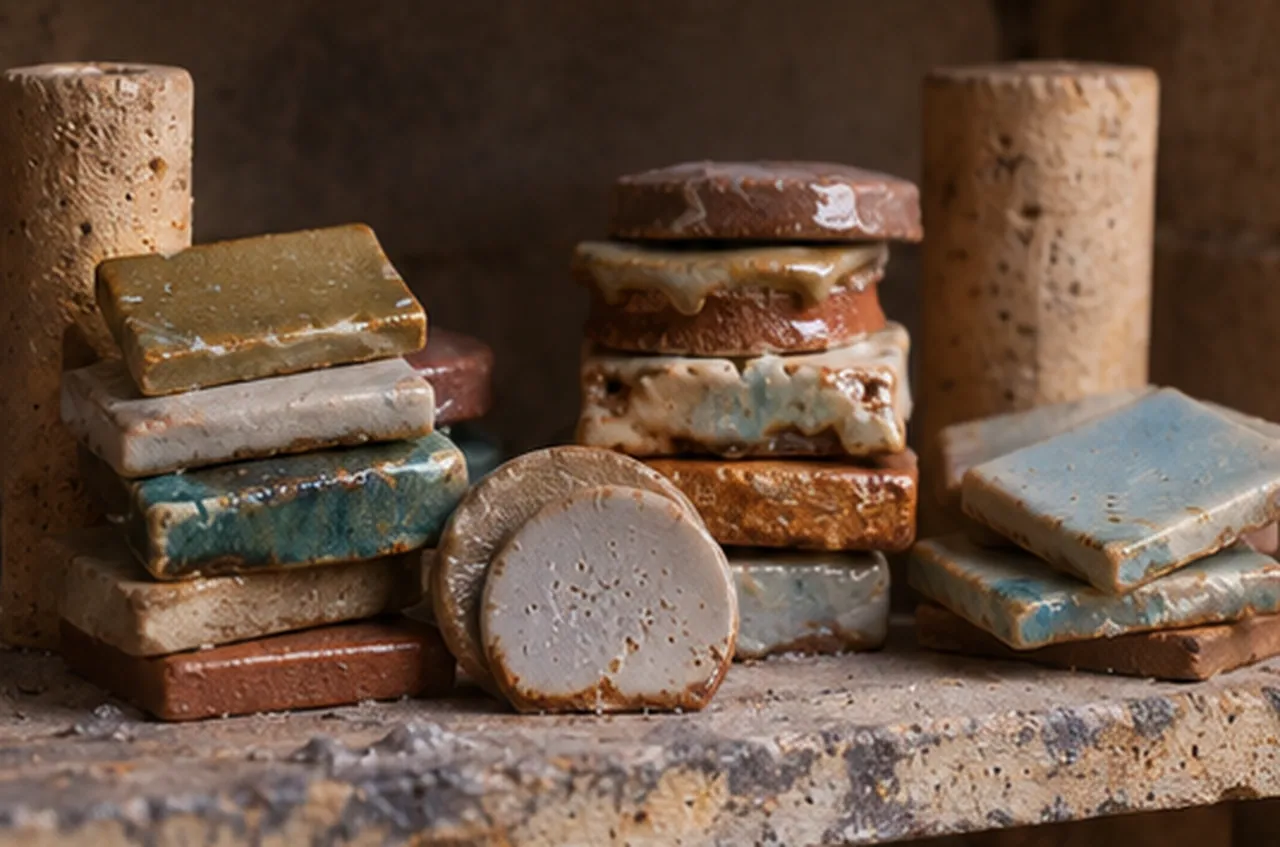
The apprentice has a shallow shelf for a neighbor’s tile and two small test pieces. A thin crack along one edge of the shelf is old and unchanged. It gives everyone around the kiln a common mark when they record where a piece sat. The next load leaves only a narrow viewing passage between two larger forms. Borrowed Kiln Shelf is a concept about making the best use of that passage while placing a group of pieces that will be compared when they return. A small difference in position can change the part of a coating that remains legible after the simulated firing.
Place a clear reference first
Set a pale clay support near the existing mark and put one sample at a known turn relative to it. The second sample needs either a place farther back or a position just inside the viewing line. You can turn a broad tile so its unglazed side faces the opening. There is then room to look past it and see the small cup. The tile can also be made to overlap a different part of the shelf. That position uses the available space well but covers a mark you might need after unloading to say which side of the cup faced the darker corner.
When the kiln view shifts to firing, you can still see the front of the large tile and part of the cone near the support. A first glance is enough to check the opening. On a second glance you can see how the bodies have masked parts of the chamber. The player writes a brief location note rather than memorizing a map of the kiln. When the work cools they can compare the small vessels from the same positions. If the change in finish is difficult to locate, the original placement marks suggest which face to bring into light first.
Work with the shape of the load
The shelf is plain refractory clay with a rough edge. Spots where older pieces sat have left differences in color and texture. We keep those marks quiet beside the stains of a recently fired test. A rounded cap can move a reflection across two adjacent samples, even when only one of their surfaces changed. In the staging study, those broader reflections help players recognize when a spot is a feature of the material or merely belongs to the place from which they are looking. Parts intended to stay simple use terracotta or warm gray with very little painted pattern.
The next load adds a taller form near one end of the shelf. The apprentice can place the smaller test on the side that is easy to inspect or keep it near the familiar chip on the harder side. Both positions can teach something when compared to a first run. A repeat at the easier location makes it simpler to read the run on the rim. A piece farther inside can make the relationship between neighboring bodies and an unexpected finish clearer. The notes explain these choices while preserving some uncertainty about the exact shade that comes back.
A limited prototype
We are developing an original prototype built around two loads and a single reference shelf. Two Feet on the Same Shelf describes how the old mark guides placement when the kiln is shared. Color after the Door Opens follows the work onto the cooling table. The immediate goal is for players to be able to rule out a misplaced sample when they see a finish they did not expect. A clean comparison should leave them with one or two useful questions to try in a later firing instead of a list of every parameter they might have changed.