
Two Feet on the Same Shelf
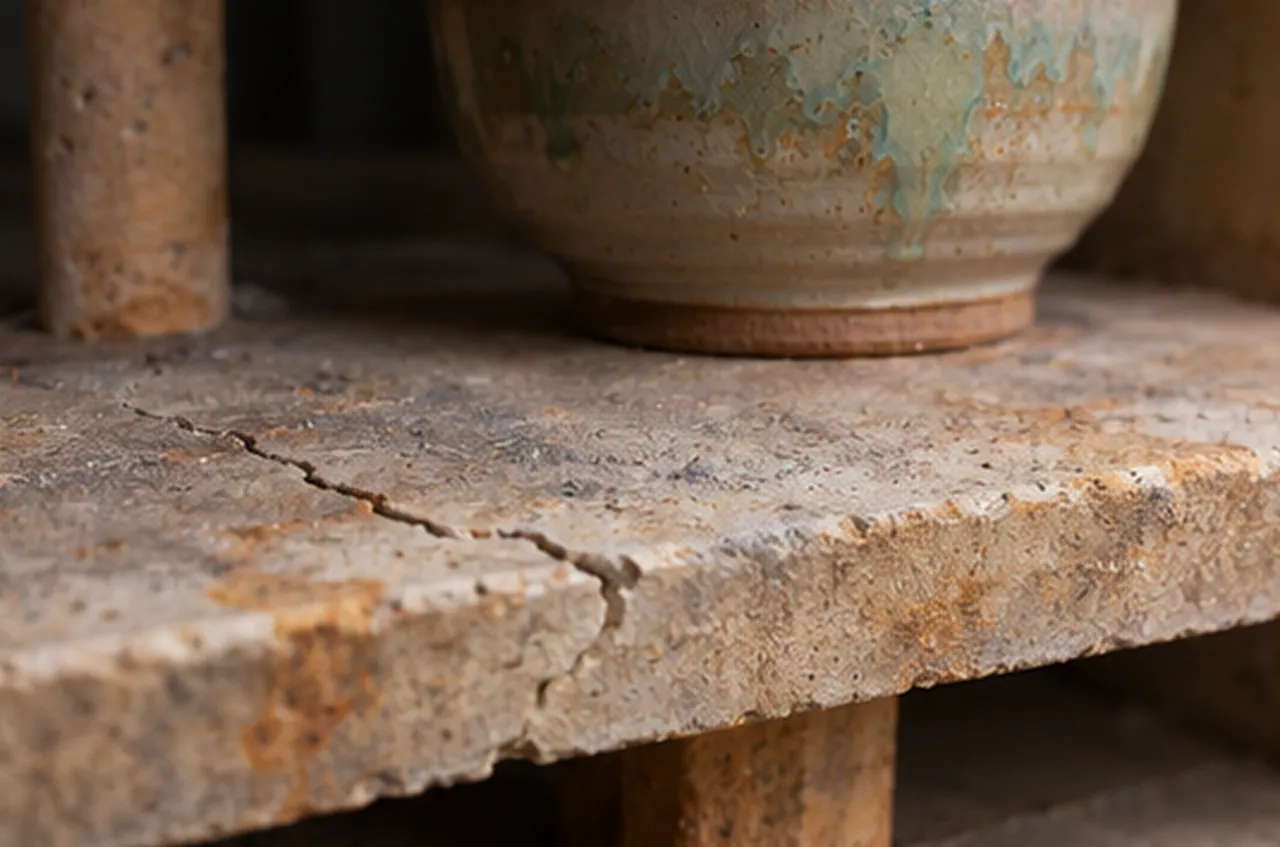
The oldest run mark on the shared shelf curves around a place where a handle once touched the clay. When we started working on this prototype it seemed sensible to give the player a large number of useful marks across the shelf. The extra marks made some individual locations easy to name, but they did not explain why two apprentices might look at the same load differently. We reduced the first exercise to a pale support, an old chip, a broad tile and two smaller test pieces. This note follows how the smaller set produces a useful disagreement about placement.
Earlier arrangement, marks across the shelf
A wide row of reference lines ran from the viewing slot to the rear board. Each piece had one nearby. This arrangement looked clear from above. Looking through the lower opening, the big tile hid the middle line beside the nearest smaller piece. The right side of the board still offered a number of reference points. Few of them helped a player tell whether the observed surface belonged to the piece on the far side. The little clay pots looked similar under the firing view. The work of tracing one position into the next scene became a memory of which line had been mentioned rather than a new observation.
The next sample took out the lines behind the larger shapes and preserved a small chip near the front corner. A pale support fits just beyond that chip. We mark one of its flat sides so its orientation stays clear from a working view. Put the near test piece a little farther round than the support. The other piece can sit beside it or farther in, with a visible space between their feet. Each arrangement now offers a distinct view of the mark. A player can explain the choice in terms of a working passage rather than a spot on a printed grid.
Revised arrangement, a moving passage
When the broad tile turns, it opens a narrow space between the sides of the other pieces. The space can show the edge of the pale support or part of the first pot, depending on the orientation. It rarely shows both. We made the underside of the nearer tile quiet enough to see a bit of shadow at the farther opening. That shadow helps identify the place where the view passes over the first test. The same structure at the rear is harder to see. The player can turn the load during setup and decide whether they can spare some room to see a little more of the support.
At the end of the test both warmer pieces are carried to the table. The earlier mark is still near the first support when the final view begins. Placing the samples down with their feet facing the same way gives the player a quick way to find whether a bright pool moved toward or away from the visible opening. We do not move the chipped part of the shelf into the reading area. The first pair of samples is enough to hold the point of comparison if the viewing passage was recorded clearly before unloading.
Use one shared frame
Borrowed Kiln Shelf gives the apprentice another piece to place during a later simulated load. The wide element can sit square against the edge or be angled toward the old reference. Color after the Door Opens explains how the same surface should be examined under steady light. The next placement test keeps the old chip visible from one side and another kiln sample close to the back. We want a player to be able to recognize which piece took which position before using its new glaze to draw a conclusion about the load.