
The Bottom of the Run
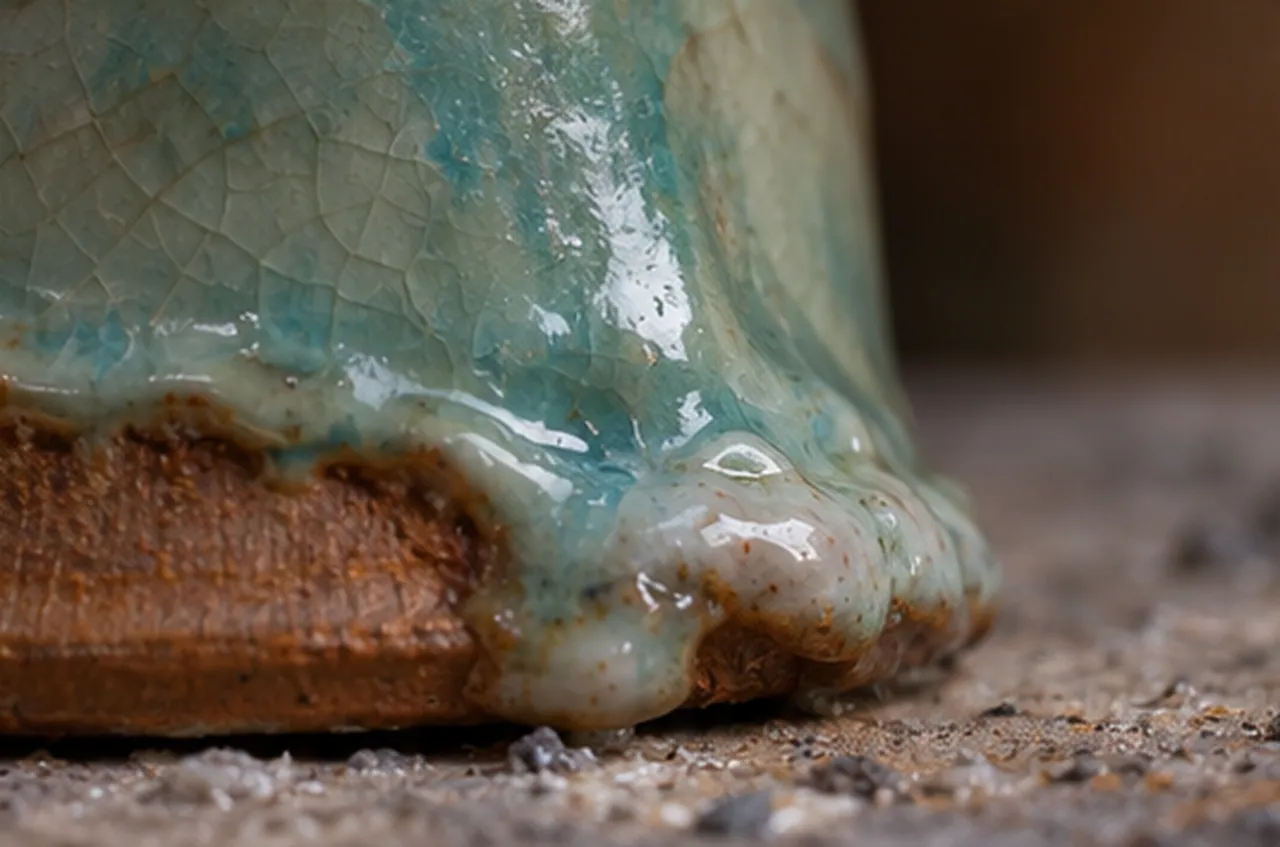
The lip of the test cup has a broad thick stroke. Near the shoulder it begins to flatten, then the glazed area gathers along one side of the foot. We are using this original ceramic model to study how a visible surface can tell the player where an earlier flavor of simulated firing went farther than planned. The first version drew the flow as an even stretch from the top down. It made the pooled material look easy to guess. The second version brought the same thickness to two different shapes and let the two surfaces produce separate edges.
Version one, enough color to lose an edge
We began with a bright blue coating over the largest part of the cup. A darker stroke followed the line down the wall. The result reads as a recognizable ceramic finish at a glance. When we placed two samples side by side, the line travelled far enough down on both to nearly meet the same dry foot. A very noticeable change in the general color masked a smaller change where the layer had settled. In a game built around choosing what to do with the next sample, losing the exact position of that edge also loses some of the usefulness of comparing them.
The first revision was to uncover a band near the base. The band gave us a plain region where old clay stayed visible under two different lighting conditions. Above it we kept the general tones close. The patch that traveled farther now appeared as a lower interruption in the pale region. The upper edge could remain bright without taking attention away from the main observation. We allowed the player to turn the piece nearly edge-on where a thinner and thicker section are clearest against the untreated base.
Version two, read the pooled shape
One version starts with a heavier layer near a shoulder that rounds inward. The pooling follows a soft turn. It leaves behind a shorter bright reflection when set below the same lamp. The other version sits on a cup whose side continues farther out. Its edge is flatter and takes up a wider region. The reflection grows longer and can make the glaze look the brighter of the two, even though the overall color samples came out close. We record the two differences separately. One is tied to how the shape meets the light. The other belongs to the location of a boundary between the coat and the clay.
To compare the results we set each cup down on a plain shelf with no rim in the foreground. A broad stripe on the table was distracting because it joined the dark lines under both feet. We removed it and moved a small marker to the place that stays visible beside each sample. There is now a clearer view of the earliest part of the pooled edge. Raising the eye introduces a second useful area on the cup walls. The two positions give different evidence. We want a player to return to one of them before choosing whether to change the early coat or the later part of the simulated firing.
Take the coated edge back into a case
Cone Before Gloss introduces a thicker stroke near a shallow shoulder. The player can compare that stroke with a neighboring sample from an earlier run. A Cone that Moves Late explains which clue was available before the group had cooled. Color after the Door Opens describes another way of checking a surface under a stable light. The next version reserves the strongest shine for a small region at the thick coat’s lower reach. If someone can find this region after returning from the chamber view, they have a useful place to check whether their next decision helped.