
Cone Before Gloss
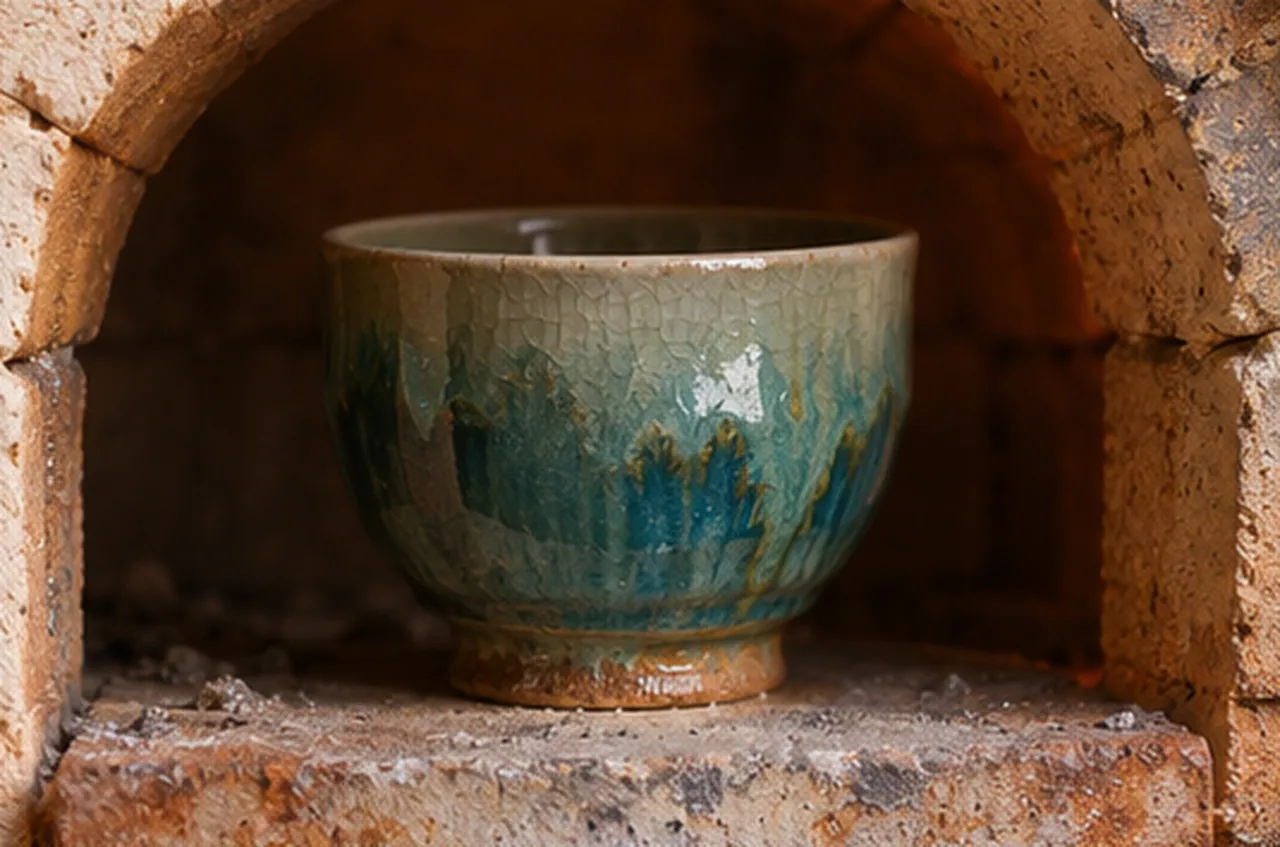
The apprentice puts a test vessel on an ordinary shelf inside a fictional kiln. One part of the cup has been coated twice. The underside still shows the grain of the bare clay. A small cone sits at the front of the load with its tip in view through a narrow opening. The first part of the game asks you to compare the cup and the cone while both are still dull in the chamber. You can choose how long to wait for a meaningful bend or change the amount of time the load spends near the end of its cycle. The finish arrives later, after the simulated pieces have cooled.
Choose a useful witness
A meter on the chamber identifies the stage of the simulated firing. It moves at a different pace from the cone. As the chamber approaches the next stage, the cone stays straight for a while. Then the tip begins to lean toward a shallow mark cut into the support. The player must decide how much of that change is enough evidence to record. A mark in the notebook gives them a way to find the same point during the next sample. It also separates the earlier observation from the later judgment about what the cup ended up looking like on the work table.
The coating along the upper rim is thin. The double layer travels toward a shallower shoulder before ending in a glossy edge. Such a result can develop even when the general color stays close to the previous sample. In the prototype the player can set one firing condition, hold the other choices, and compare the resulting surfaces from the same angle. A shifted line shows a change in the flow of the glaze and a dull reflection near the front shows that a flatter area still has another kind of finish. It takes less time to see those differences when the two cups are set against the same plain background.
A firing room built for comparison
Our scene uses clay brick with warm shadows and subdued olive along the shelf. The darker part of the opening stays broad enough to distinguish the shape of the test cone. When the work comes out, the display puts the cups under a sidelight. The sky-blue finish can be seen even on a shallow curve. The glaze sits heavily in one corner. We avoid decorations near that point, leaving the viewer a plain space in which to judge how a layer appears to meet bare clay.
A later test adds a second glaze at the shoulder. The apprentice has to record which mark was made by the firing and which one was already part of the preparation. One outcome can look clearer under the brightest light while a more useful difference is visible from the other side of the table. The game keeps that order of observations close at hand. Choosing the next setting should become easier when the player can point to the surface they want to change rather than repeat one broad color request.
Working scope
This is an original prototype in development. It describes an apprentice learning to connect a simulated firing with its results, with no real kiln settings provided. A Cone that Moves Late documents the first comparison between the meter and the shape of a cone. The Bottom of the Run looks at one thick layer after it moves. We are building the short run that lets a player change one part of the process and retrieve both samples in good light. That is where the effect of the decision must become visible.